Stories From the Field
Joe Finds the Right Fit with AAC Device Trial
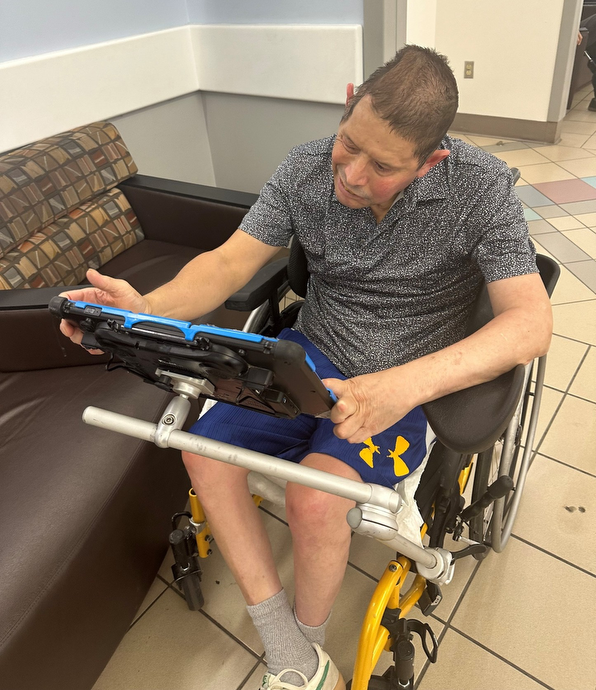 Joe, a social and resilient individual who has survived a brain tumor resection and a stroke, uses a communication device to stay connected with family, friends, and his community. His current device was outdated, so through the Ability Tools program, he borrowed an Accent 1000 to compare it with his existing Accent 1400. After an extended trial, Joe found he could communicate faster with the smaller Accent 1000 but ultimately felt the Accent 1400 better suited his needs. He is now awaiting insurance approval to receive a new Accent 1400 as his permanent replacement.
Finding Her Voice Again: Assistive Technology Helps a Realtor Return to Work (Colorado)
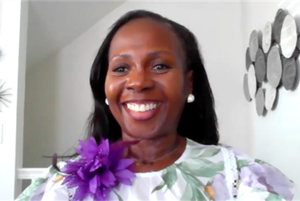 A real estate agent lost her ability to speak after suffering a stroke. She had to rebuild many parts of her life, including her career. “I had to learn everything all over,” she said. “I haven’t worked for a long time, but [I] didn’t want to lose me as a realtor with everything else.”
That’s where the Assistive Technology Program of Colorado (ATP) came in. She worked with her speech-language pathologist for a year, trialing multiple augmentative and alternative communication (AAC) devices before finding the one that helped her achieve her goal of returning to work. Newly equipped, she reactivated her real estate license and returned to work for the first time since her stroke. Real estate is a “very communicative industry,” she notes, “and I can’t stop living.”
Planning Ahead: Assistive Technology Supports Safer Aging at Home (North Dakota)
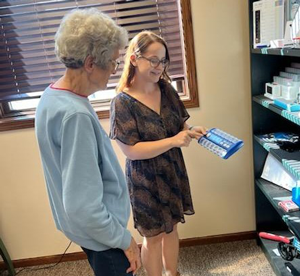 Marlys and her daughter-in-law were experiencing growing stress related to Marlys’ physical and cognitive changes. With early signs of dementia, they decided to get ahead of the challenges and begin planning for ways to support Marlys’ independence and safety.
At the North Dakota Assistive Demonstration Center in Fargo, an assistive technology (AT) consultant, Shannon Bozovsky, demonstrated a range of tools designed to help with daily living. These included the RAZ Memory Cell Phone, smartphone accessibility features, bed and bathroom organization tools, bookshelf door decals, elopement tracking devices, contrasting dishes to support eating, and locked medication dispensers. After the visit, Marlys’ daughter-in-law shared her appreciation in a follow-up message: “Thank you so much for heightening our awareness to so many resources out there to manage day-to-day life. Appreciate all you do!”
Exploring New Possibilities with Apple Vision Pro (Connecticut)
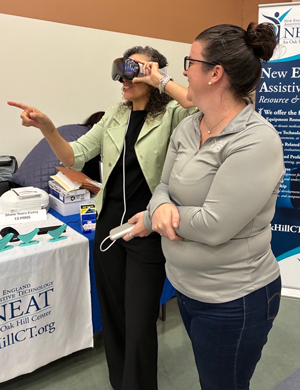 A technology representative was interested in trialing the Apple Vision Pro to learn more about its features, including built-in accessibility tools and its potential to enhance workplace productivity. During the trial, she explored the platform and identified her personal preferences. She noted her preference for using pointing gestures and not relying on eye control.
She was also able to assess practical considerations, such as how heavy the unit felt when worn and how she or future clients might position the battery pack during use. An assistive technology specialist from the Connecticut Tech Act Project provided guidance and feedback throughout the trial, sharing insights from previous demonstrations and exploration of the device. This experience helped the representative better understand how she could use the Apple Vision Pro for her own employment tasks and potentially introduce the technology to support clients in their work.
One Hand, New Opportunity: Finding the Right Keyboard for Work (Texas)
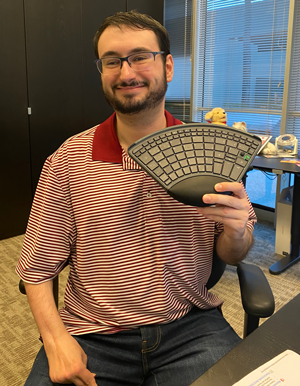 BridgingApps met with an adult client with a physical disability that affects the use of his right hand. He was working with the transition program at Easter Seals Greater Houston to find employment and wanted to learn about his assistive technology (AT) options for the workplace. He visited the BridgingApps AT lab to trial Dragon NaturallySpeaking dictation software on one of the computers provided through the Texas Technology Access Program (TTAP), as it was a program he had used in the past.
During the trial, he discovered that the software would not meet his needs and asked about keyboard options that could help him perform the tasks required for a potential job. A BridgingApps digital navigator discussed one-handed keyboard options and requested the TIPY Keyboard from TTAP for the client to try. Once it arrived, the client tested the keyboard, loved it, and requested a short-term loan. He felt relieved to find a device that met his needs and appreciated the extensive training resources provided by the developer to help users learn one-handed typing. With generous funding from Compudopt, BridgingApps was able to purchase the TIPY keyboard for the client. He has been practicing with it ever since, preparing for his next job opportunity.
Lending Library Helps Three Generations Experience the Redwoods
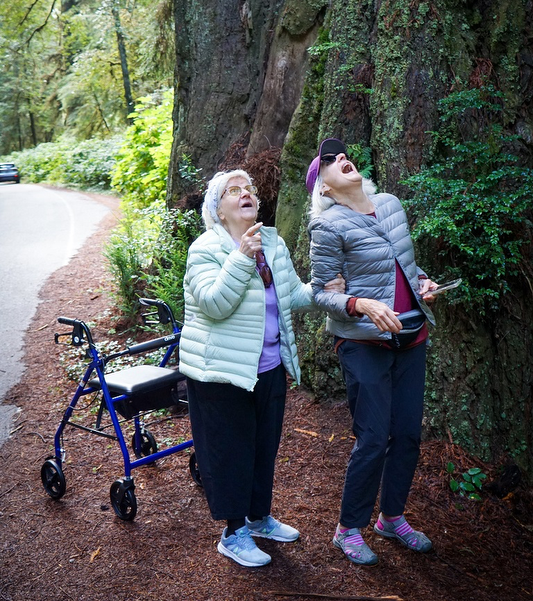 Katie contacted the Oregon AT Program's lending library for mobility equipment for an upcoming trip. Her grandmother and mother were visiting to experience the beauty of the Pacific Northwest, with a highlight being her grandmother's lifelong dream of seeing the redwoods. To meet her grandmother's mobility needs, Katie and her mother researched ADA-accessible trails in the area. Katie borrowed a manual wheelchair and a rolling walker with a seat from the lending library to make the trip easier.
The visit was a success, and Katie shared, "Even though I knew the forest was majestic, I was surprised by how deeply it moved my grandmother. She kept thanking us and telling strangers that visiting the redwoods was on her bucket list—and that her daughter and granddaughter had made it happen. Without the lending library, none of this would've been possible."
Supporting Success at the Alabama State Bar Exam
 The admissions officer for the Alabama State Bar Exam contacted Alabama's Assistive Technology Resource (APTAT). The Bar Office was referred to APTAT by vocational rehabilitation for assistive technology support. Two examinees had requested accommodations, and each visited APTAT to trial devices from our library. One explored mobile standing desks and ergonomic mice; the other tested CCTVs, text-to-speech tools, keyboards, and screen magnification. Each selected a setup tailored to their needs. APTAT delivered and set up the devices at the exam site for their three-day exam. The Bar Office was grateful for the support, and we were proud to contribute to such an important event!
Touchdown for Communication and Mobility (Montana)
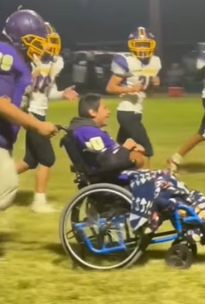 Fourteen-year-old CM lives and breathes football. He follows the Washington Commanders, but his true loyalty lies with the Hays/Lodgepole Thunderbirds. CM has cerebral palsy and is nonspeaking, which can make joining in football conversations difficult.
Through the Montana Assistive Technology Program (MonTECH), CM borrowed a tablet-based augmentative and alternative communication (AAC) device that transformed daily life at school and at home with his grandmother, T. “He’d get frustrated when I kept asking, ‘Do you mean this? Do you mean that?’,” T says. “Now he’ll grab that iPad and just tell me.” The device also lets CM talk about what he loves most: football.
CM also borrowed a lightweight, foldable wheelchair, giving him greater mobility than his bulky chair. This fall, he used it to join the Thunderbirds on the field to run a play—rolling into the end zone for a touchdown as the hometown crowd cheered. “I keep fighting for him because he deserves more,” T says. “Everything we’ve borrowed from MonTECH has helped him make amazing progress.”
Bright Tools, Big Progress: Technology Helps Gianna Keep Up in Class (Illinois)
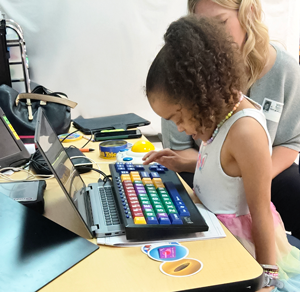 Gianna, a first grader, has vision difficulties along with coordination and attention challenges resulting from a brain injury. These challenges made it difficult for her to fully participate in classroom activities. Fortunately, she has a strong school team—including her teacher, occupational therapist, and vision therapist—who have implemented several assistive technology (AT) supports. These included high-contrast boards with colorful backgrounds and a slant board with a clip-on light to bring reading materials closer and improve visibility.
Despite modified pencils and therapy supports, reading and handwriting remained difficult. Gianna often lost her place while reading, and writing was slow and tiring. Her school made a referral to the Illinois Assistive Technology Program (IATP), and an assistive technology specialist (ATS) visited her school for an assessment.
Gianna successfully trialed tools including video magnifiers, accessibility settings, a large-key keyboard, word prediction software, text-to-speech, and a rollerball mouse—helping her read, type, and participate more confidently in class.
Small Adaptations, Big Independence (Michigan)
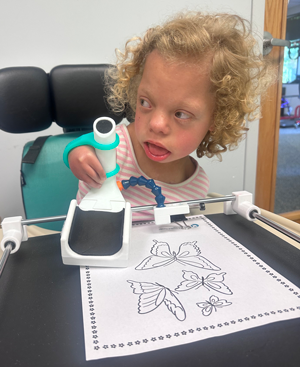 The Michigan Assistive Technology Program (MATP) connected with Natalie, a young girl with a limb difference, through her occupational therapist (OT). Natalie is learning to feed herself, and MATP provided demonstrations and short-term loans of several types of adapted silverware to help her practice this important skill.
Natalie also received a demonstration and short-term loan of Guided Hands, an assistive device that helps individuals stabilize and guide hand movements. MATP and her OT collaborated to try different grip options to best support Natalie’s access needs. A silicone grip added to the joystick handle worked best for her.
Natalie, her mom, and her OT were thrilled when Natalie was able to reach much more of a coloring page with her markers using this combination of AT. The moment showed how small adaptations can open the door to greater independence and participation.
A Voice for His Knowledge: Assistive Technology Rekindles a Pastor’s Purpose (Puerto Rico)
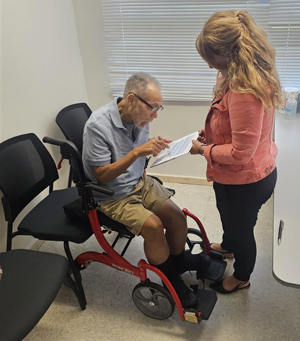 Miguel, a man in his mid-seventies, is living with Parkinson’s disease, a condition that has affected both his speech and motor abilities, including walking. Before retiring, Miguel served as a pastor, and speaking was central to his identity and sense of purpose.
Through device demonstrations with the Puerto Rico Assistive Technology Program (PRATP), Miguel explored tablet-based augmentative and alternative communication (AAC) options and discovered new ways to express himself. In the short term, he benefited from a low-tech communication board provided through PRATP’s reuse program, which helped him convey his thoughts and needs more effectively.
With this tool, Miguel began sharing a long-held dream: writing a book about medicinal plants in Puerto Rico. For him, assistive technology became more than a tool: It became a pathway back to purpose, expression, and connection.
Rain, Grain, and All-Terrain: Navigating Farm Life with an M3 Power Chair
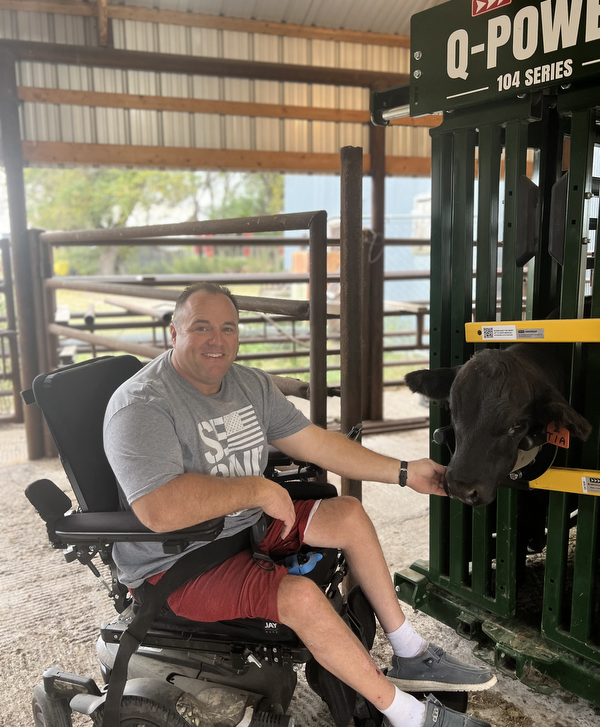 Ranchers wear boots for a reason—they're built for the rough terrain of pastureland and cattle corrals. Now, imagine navigating that same ground in a wheelchair. That's daily life for Bret, who checks fences, feeds cattle, and tags calves using a manual or power wheelchair, an ATV, or a pickup with a lift. After a 2004 accident left him with a spinal cord injury, Bret adapted—but most power wheelchairs aren't made for rugged ranch work. He's worn out many wheelchairs, and even with heavy-duty models, tasks like tossing grain, fixing fences, or vaccinating over 150 cattle each season remain physically taxing. That changed when Assistive Technology for Kansans (ATK) provided a used Permobil Corpus M3 power chair with a 12-inch seat elevation.
Bret immediately saw the benefits. "There's a fridge right next to the chute with the vaccines," he said. "Being able to turn on a dime and raise the seat makes a huge difference. I can work more independently, and it's eased the strain on my shoulders—especially important since I recently found out I have two torn rotator cuffs."
Low-Tech Solutions with High-Impact Results
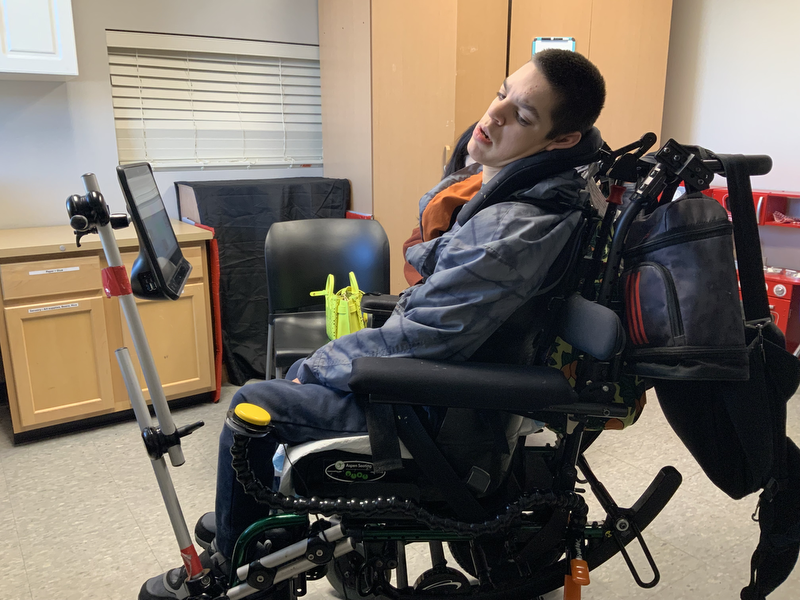 Eduard, an 8th grader with cerebral palsy receiving outpatient Augmentative and Alternative Communication (AAC) services at the CIDE Assistive Technology Clinic, was a recipient of one of the Assistive Technology Program of Colorado's open-ended loans. He came to our clinic with a Tobi I5 and eye gaze system but no mount to secure it to his wheelchair, rendering it unusable. Since he wasn't due for a new device for another two years, he was provided with a device mount. Using the mount in conjunction with his Tobi I5 has transformed Eduard's life. He now uses his AAC device regularly and has access to a means of communication at school, at home, and in the community. One of his teacher's states, "He is a completely different kid and is now interacting with his peers and other teachers."
Reuse Programs Give Tristan a Better Wheelchair and Support His Independence (Alabama)
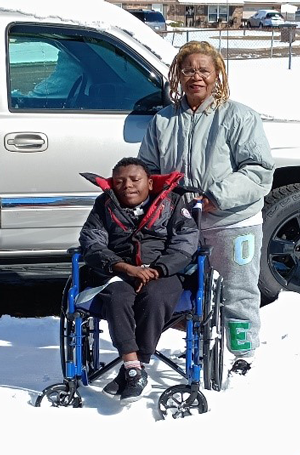 Tristan, a 12-year-old boy living with his grandmother in Houston County, Alabama, has been through more than 50 surgeries and uses supports for breathing, eating, and mobility. He had outgrown his old wheelchair and urgently needed a new one suitable for his size until he can be fitted for a wheelchair funded through insurance.
Tristan’s grandmother visited the R.E.A.L. Project, a reuse program of the Wiregrass Rehabilitation Center in Dothan, Alabama, part of Alabama’s Assistive Technology Resource (APTAT). The program provided Tristan with a manual wheelchair featuring a larger seat, adjustable footrests, and a comfortable cushion, equipment that would have cost around $1,000 new. Thanks to generous community donations of durable medical equipment, the R.E.A.L. Project provided it at no cost.
Now, Tristan is much more comfortable. His grandmother says the program is a blessing, “because it gives Tristan the right tools to live his best life without the family having to pay a huge cost.”
Assistive Technology Restores Connection for Veteran (Guam)
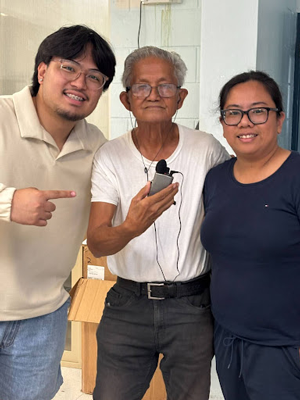 In September 2025, M.B., an 83-year-old veteran, visited the Guam System for Assistive Technology (GSAT) office with a friend to seek hearing assistance equipment. He learned about the program through a veterans’ support group. M.B. currently lives in a habilitation shelter and has a hearing disability resulting from injuries sustained during the war, which made participating in support group meetings difficult.
Having used various assistive technology hearing devices in the past, M.B. had recently relied on a friend’s worn-out device that required frequent shouting or repetition. GSAT provided him with a new amplification device. Upon trying it, M.B. became emotional and nearly in tears, expressing disbelief that the device was provided at no cost. He also shared a strong desire to give back in the future. Staff were amazed by the immediate transformation, as M.B. displayed visible expressions of hope, joy, and renewed connection.
Assistive Technology Helps Larry Explore and Move (Oklahoma)
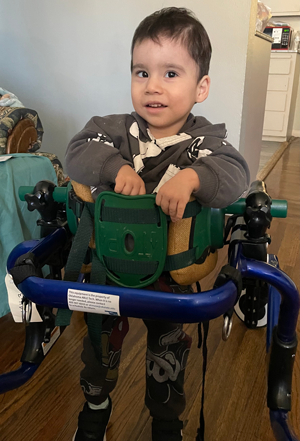 Larry is a young child who needs support to stand or walk. SoonerStart, Oklahoma’s early intervention program, referred Larry’s family to Oklahoma ABLE Tech’s Device Reutilization Program, where they received a pediatric gait trainer and an adaptive stroller.
The pediatric gait trainer helps Larry learn to stand and walk independently. Functioning like a walker, it provides extra support and stabilization. With it, Larry has begun putting weight on his feet and moving around his environment on his own.
The adaptive stroller allows Larry to leave home more easily and explore new places. It provides upper-body support and full-body positioning, giving him the stability needed to safely enjoy outings.
Tools for Wellness: Assistive Technology Supports Sarah’s Health and Caregiving (Louisiana)
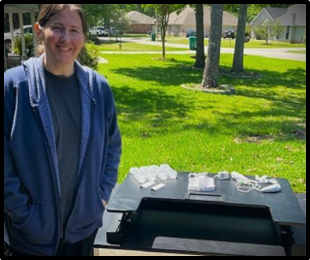 G, a mother living with Multiple Sclerosis and caring for aging parents, used the Louisiana Assistive Technology Access Network (LATAN) AT Market program to purchase Wii controllers with an energizer station, a height-adjustable stand-up desk converter, and a full-size adjustable-height table.
These products help prevent long-term strain from bending and standing, an important consideration for someone who gives so much of herself to others. While G kindly offered to have her husband assist LATAN staff with setting up the tables, the team chose to deliver and set up the items independently to showcase their services.
G and her family were incredibly grateful. Before the staff left, she shared, “Thank you, you guys have helped me so much. In the past, you also helped one of my family members and for this we thank you.” With these assistive technology tools, G can better care for herself while supporting her loved ones.
Exploring New Places with Orin & Noodle
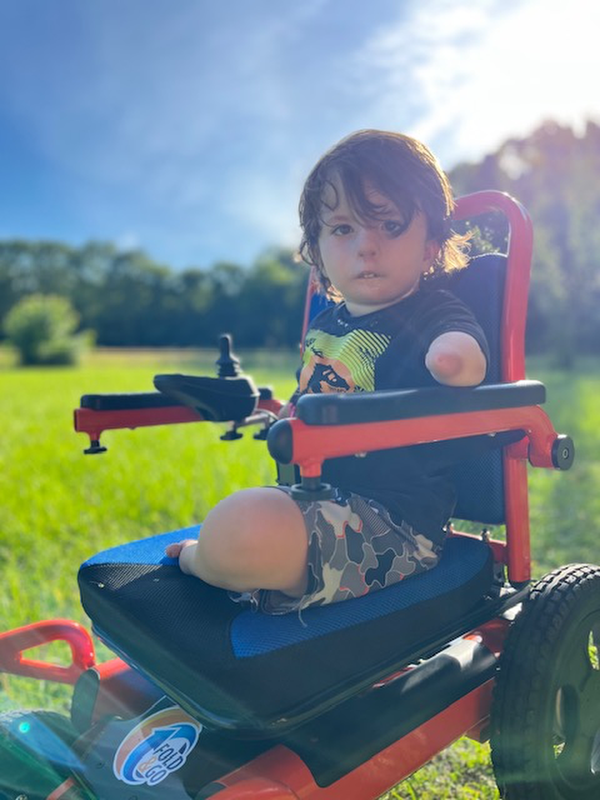 Our new partnership to support the administration of the last-resort funding organization, Libby's Friends, has been a joy to see come to fruition. Libby's Friends does amazing work—fundraising and working tirelessly to fulfill as many assistive technology requests as their budget allows. One heartwarming story comes from a family who received a folding power chair for their son, Orin. The chair, affectionately named "Noodle," has given Orin the freedom and independence to explore his world. His mom shared, "We are learning so much more about O's personality now that he can explore new places at his own pace. He looked at me in amazement the first time we took Noodle out and I told Orin, 'Go where you want to—I'm right behind you.' We were at a community festival, and he went straight for the cake tables!" They also report that the chair's impact is growing, as Orin's providers are now recommending similar devices to other patients after seeing the positive results.
Transformative Technology for a 21st Century School Experience
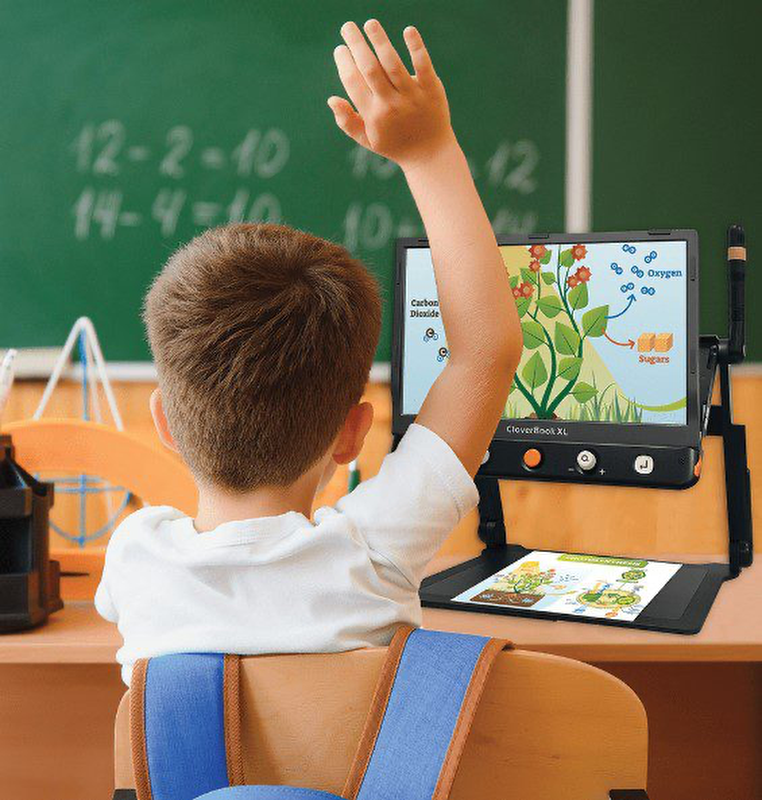 After trying out a CloverBook recommended by DakotaLink, one student finally received a device of his own—and the difference has been remarkable. Previously, he used a bulky, outdated vision board that was heavy, hard to move, and offered limited features. It became more of a burden than a support, especially as academic demands increased. After an assessment, DakotaLink provided a CloverBook for trial. The student received the CloverBook within one week, and staff helped train the student and his teachers.
From day one, his classroom engagement and confidence noticeably improved. Now, he can view the front of the classroom and complete written work at the same time. He can track a moving teacher and switch between materials with ease. His independence and participation have increased dramatically. The right technology can be life-changing and this device has transformed his school experience.
Assistive Technology Transforms Daily Life (Alaska)
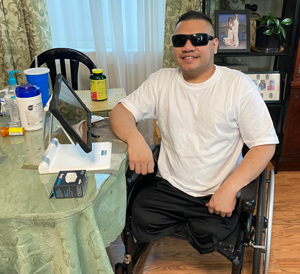 Shaquil was referred to Assistive Technology of Alaska (ATLA) by the Alaska Center for the Blind and Visually Impaired (ACBVI). He is legally blind and has bilateral amputations from a severe infection. While Shaquil had some assistive technology (AT) experience and had already learned to use his smartphone with VoiceOver through ACBVI, he sought greater independence at home.
Shaquil openly shared that he experienced depression after losing his vision and legs, but participating in ACBVI services helped him adapt. Based on his goals, the AT Specialist qualified him for TechAbility. One key goal was returning to cooking and navigating his two-story home safely. With his strong technology skills, he received a voice-activated display and an additional smart speaker.
The smart speakers help him communicate with family across different levels, while the kitchen display identifies objects to support cooking. Shaquil shared his excitement: he can cook again, communicate more easily, and explore features that increase his independence.
Staying Connected: Accessible Technology Helps Kara Thrive at Work (Kansas)
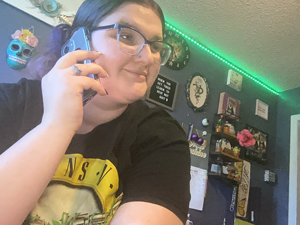 L is a determined young woman with both hearing and vision impairments, and staying connected with others has always been important to her. Her old phone couldn’t connect to her cochlear implant, and the screen did not magnify enough, making everyday tasks, especially at work, difficult.
Her mother, who has the same genetic condition and was familiar with Assistive Technology for Kansans (ATK) and the Kansas Telecommunications Access Program (TAP), encouraged L to seek support. Through TAP, L received an iPhone 16e designed to support people with hearing and vision loss.
With powerful amplification and magnification features, the phone has helped L succeed both at home and on the job. She works full-time at Walmart, recently earned Employee of the Month, and uses the phone to communicate with coworkers when walkie-talkies are unavailable. “The phone works wonders,” L says. “It helps me so much at work and at home. Staying in touch is easier and fun!”
Assistive Technology Helps Mac Hit the Road (Connecticut)
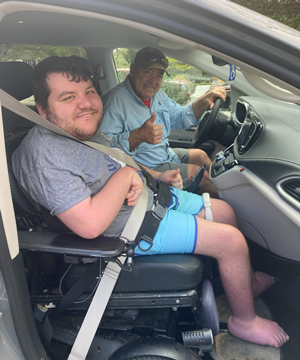 Mac, a young man with Cerebral Palsy, is pursuing work and independent living. While receiving vocational rehabilitation (VR) services, he was exploring options to modify a vehicle so he could travel to and from work as a passenger. He needed to purchase a brand-new van to meet his accessibility needs.
Mac reached out to the Connecticut Tech Act Project for support through their Assistive Technology Loan Program, which offered lower interest rates and flexible terms. This allowed him to afford a new van while keeping monthly payments manageable.
His previous van had manual wheelchair tie-downs, which were challenging for his aging parents and time-consuming. The new van features automatic tie-downs, giving Mac the ability to secure his wheelchair independently. This not only relieves his parents of the task but also allows him to travel with family or friends to work and community activities, expanding his independence and participation.
Cooking with Confidence: Adaptive Technology Rekindles a Passion (Illinois)
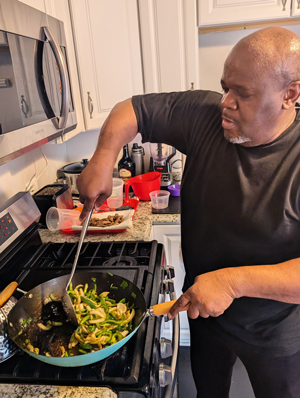 Howard has always loved cooking, but after losing his vision in 2015 due to end-stage glaucoma, he faced new challenges in the kitchen. Determined to continue preparing meals and sharing them with others, he was referred to the Illinois Assistive Technology Program (IATP) Tech Kitchen Program to explore how assistive technology (AT) could support his independence.
From his very first session, Howard’s enthusiasm was clear. During his initial evaluation, he confidently navigated his kitchen and shared his goal of multitasking and keeping several dishes hot at once. Together, he and the specialist prepared a meatloaf recipe using adaptive tools, such as a talking thermometer, tactile-labeled measuring cups, a talking kitchen scale, heat-resistant gloves, and tactile markers on his oven and stove. Howard quickly grasped the purpose of each device and was thrilled by how much safer and easier cooking had become.
Over subsequent sessions, Howard’s skills and confidence grew. By the final session, he successfully prepared a multi-step quiche independently, demonstrating strong multitasking, precise measuring, and excellent safety awareness. “I now feel fully equipped to work in my kitchen,” he shared, “and I’m excited to cook for friends. The program has given me independence and confidence.”
A Van That Keeps the Business Rolling (Wisconsin)
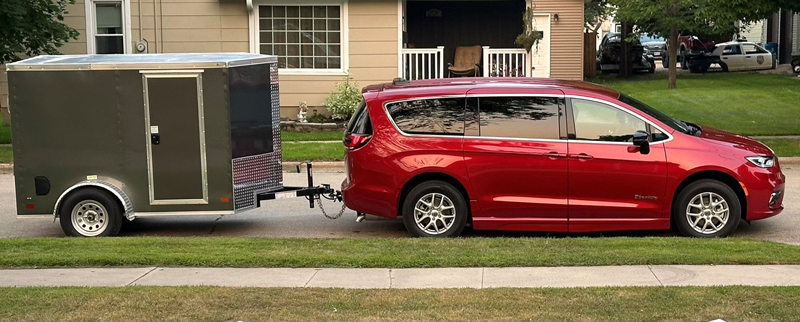 Wisconsin Assistive Technology Program (WisTech) helped a retired couple continue their small craft business by providing financing to obtain an accessible van and trailer. The couple creates and sells handmade craft items to supplement their retirement income, often traveling to local shows and community events.
With support from WisTech, they were able to purchase a van that meets their accessibility needs, along with a trailer to transport their crafts. The new vehicle allows them to keep participating in the work they enjoy while maintaining financial stability in retirement.
In a message of thanks, they shared their appreciation: “We want to thank you again for everything you did to help us get our new van. We thought this would be at least a 6-month process, but you pushed it through in a very short time, and the down payment assistance amount was absolutely incredible. It was life changing, and there aren't enough words to express our appreciation.”